Open today · 00:00–23:59

Mt Fuji And Hakone Tour — 5th Station Access & Reserved Departures

Mt Fuji And Hakone Tour — 5th Station Access & Reserved Departures

Cloud gathers by noon, so the mountain rewards the early

310K+ travelers chose this
Free Cancellation
Right now: Moderate — summer peak season Expect mountain-specific weather changes and higher UV levels at 2305 meters altitude.
10-12 hours from Tokyo
1 Languages
Up to 40 travelers
Free Cancellation
Free cancellation Instant confirmation Mobile voucher Verified partner Book now, pay later
Choose your ticket

Ticket options at a glance

Compare fares, pick the fit — all bookings are mobile-voucher and eligible for free cancellation where shown.

Tokyo to Mt. Fuji, Hakone & Bullet Train Day Tour 10 hr
Guided Experience

Tokyo to Mt. Fuji, Hakone & Bullet Train Day Tour

4.4 (5263)
€129
  • Expert local guide
  • Small group
  • Skip-the-line access
  • Free cancellation
Book this ticket
Mt. Fuji, Hakone & Owakudani Full-Day Tour from Tokyo 24 hr
Guided Experience

Mt. Fuji, Hakone & Owakudani Full-Day Tour from Tokyo

4.9 (617)
€42
  • Expert local guide
  • Small group
  • Skip-the-line access
  • Free cancellation
Book this ticket
Head to head

Mt Fuji and Hakone Tour — 5th Station vs Full Hakone Loop

The 5th Station offers direct proximity to the volcanic peak, while the Full Hakone Loop provides a diverse cultural experience; choosing a mt fuji and hakone tour depends on whether you prefer high-altitude alpine immersion or multi-modal sightseeing.

Top pick
Fuji 5th Station
Hakone Full Loop
Primary Focus
Accessibility
Physical Demand
Typical Duration
Main Viewpoints
Geological Interest

Verdict: Visitors seeking mountain summit access should prioritize mt fuji and hakone tour tickets, whereas those valuing lake views and volcanic hot springs benefit more from mt fuji and hakone tour tours, though many choose bundled mt fuji and hakone tour packages to experience both.

Featured Experiences

Popular tours & activities

Hand-picked experiences loved by thousands of travelers

Recommended Experience

Powered by GetYourGuide

Another traveler favorite

Powered by GetYourGuide
Mt. Fuji & Hakone Day Tour from Tokyo with Bullet Train Return 11 hours Free Cancellation

Mt. Fuji & Hakone Day Tour from Tokyo with Bullet Train Return

Scale Fuji's 5th Station, ride a volcano gondola, cruise Lake Ashi & zip home by Shinkansen.

4.2 (1546)
FromFrom €97.94
See details
Mt. Fuji & Hakone Day Tour with Bullet Train Return from Tokyo 10 hours Free Cancellation

Mt. Fuji & Hakone Day Tour with Bullet Train Return from Tokyo

Six iconic stops across Fuji and Hakone — volcanoes, shrines, a lake cruise, and a bullet train finale.

4.3 (745)
FromFrom €93.99
See details
Tokyo to Mt. Fuji & Hakone: Private Full-Day Tour with English Driver 10–11 hours Free Cancellation

Tokyo to Mt. Fuji & Hakone: Private Full-Day Tour with English Driver

Escape the bus crowds on a 10–11 hour private journey from Tokyo to Mt. Fuji and Hakone, your way.

4.7 (697)
FromFrom €323.4
See details
What you'll see

Highlights not to miss

Komitake Shrine

A historic shrine offering panoramic views of the Fuji Five Lakes and surrounding peaks. It is a traditional site for pilgrims.

Large Observatory Square

A wide space perfect for viewing the mountain summit and taking photos. It is the center for sightseers.

Ochudo Trail

A scenic circular trail around the 5th Station offering close-up nature views without requiring steep climbing.

Yoshida Trailhead

The most famous starting point for climbers heading to the summit of the mountain.

Fuji-themed Souvenir Shops

Various stores offering unique mountain-shaped snacks and climbing gear for visitors.

The experience

What the visit is really like

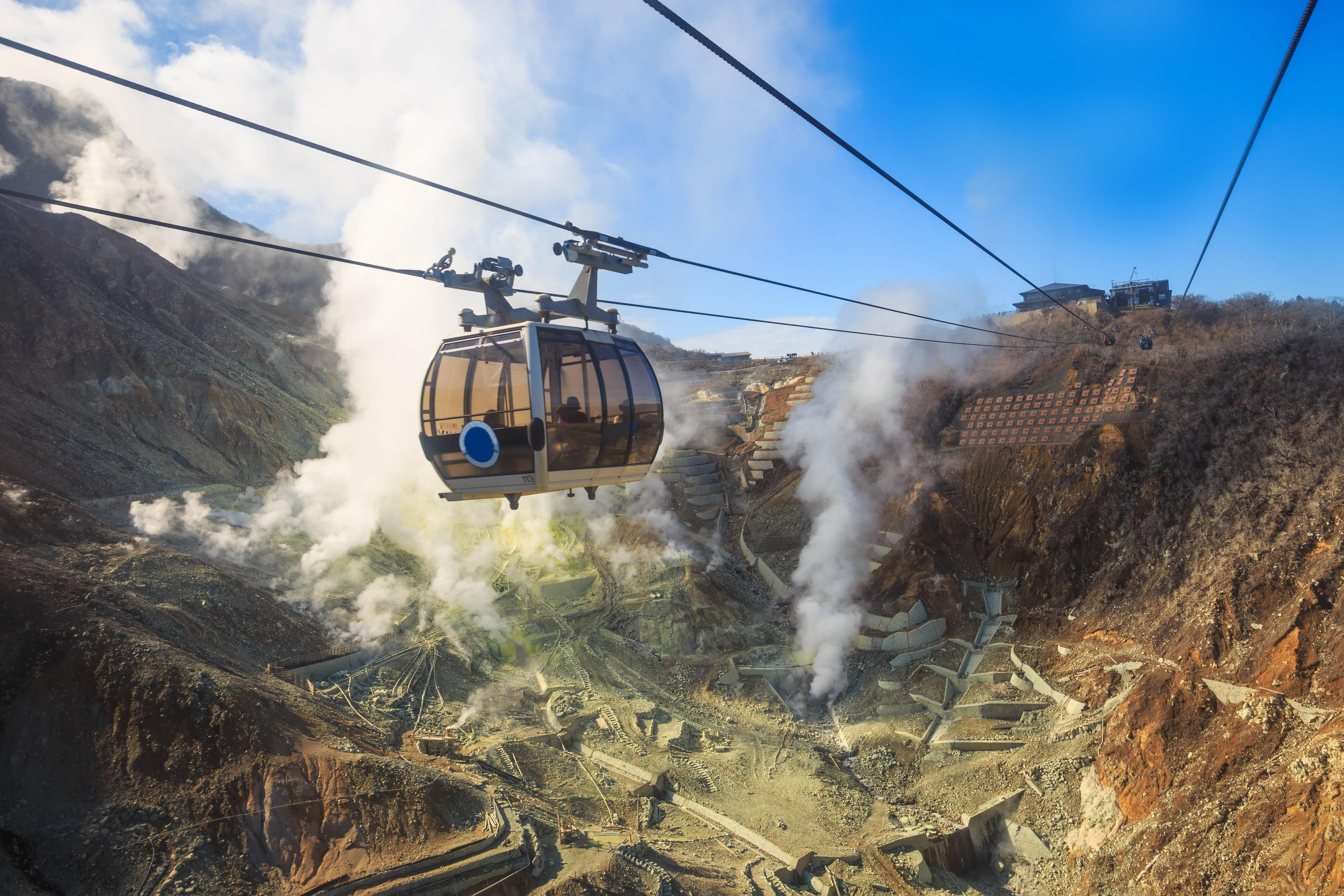
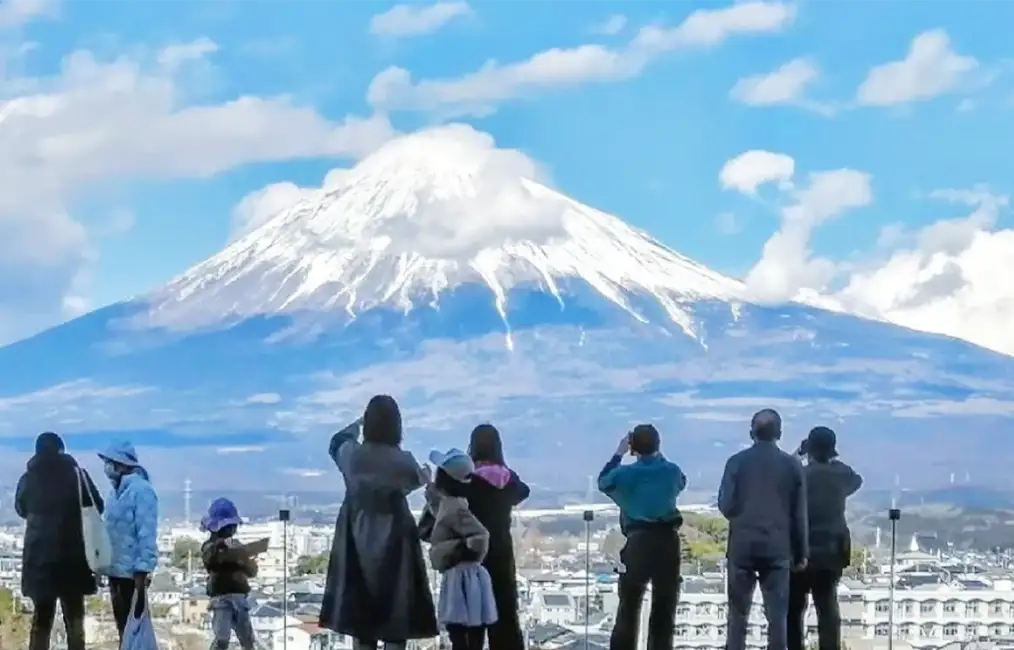
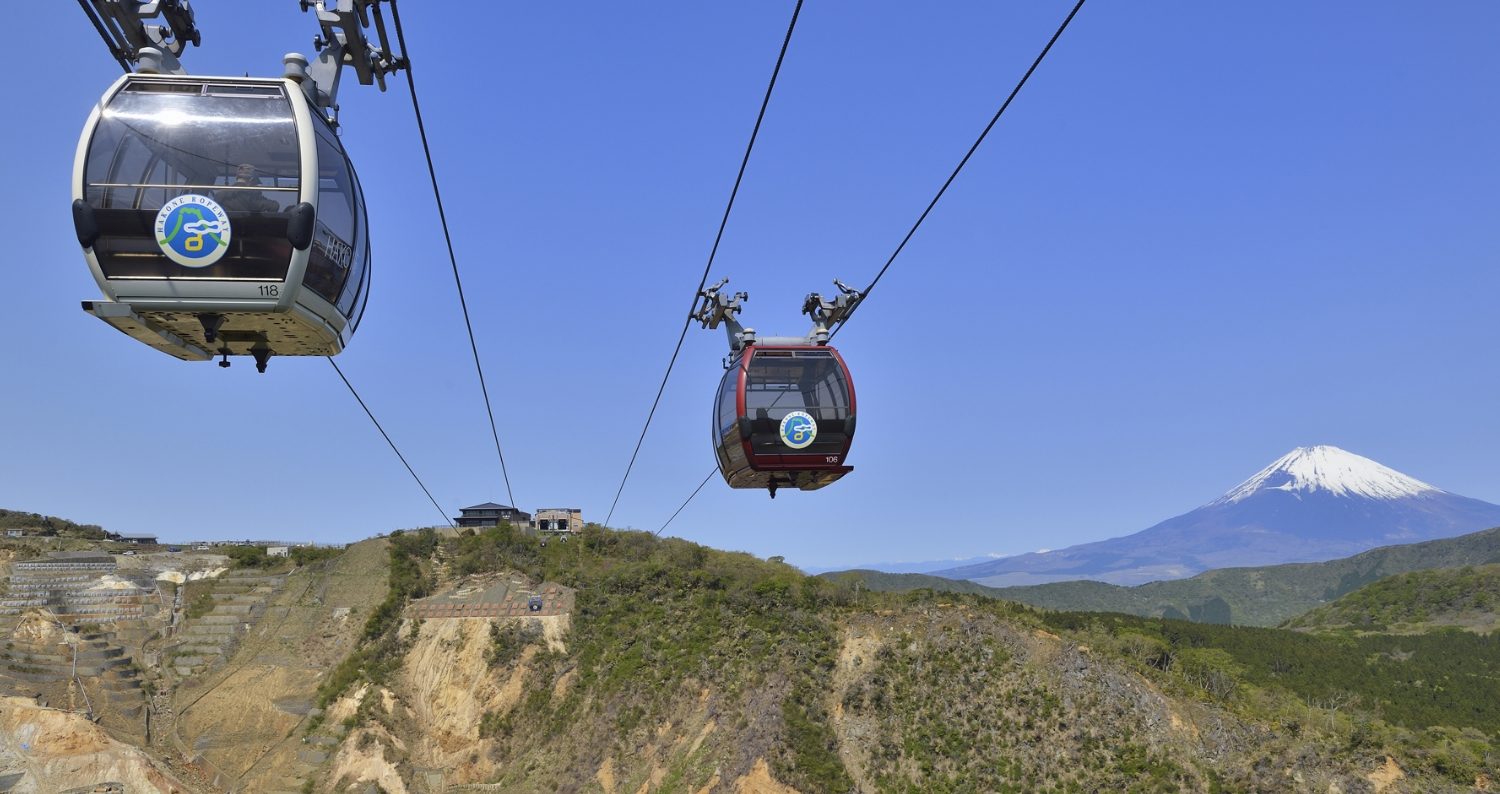
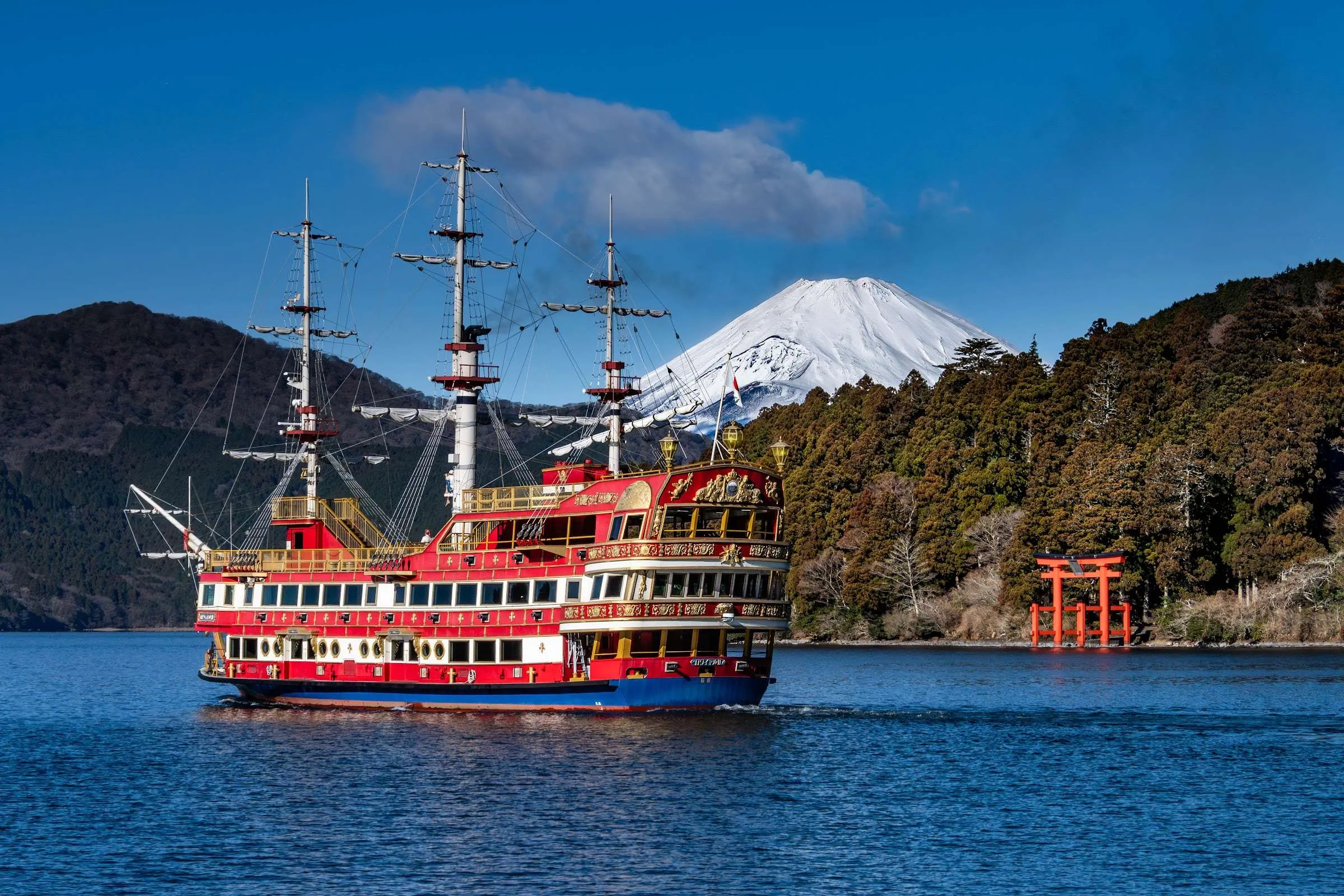
You leave Tokyo in the dark, because the arrival window that matters is 07:00–10:00 and the Subaru Line takes its time. The bus climbs through five vegetation zones in forty minutes. Your ears pop twice. At the top you step out into air that is noticeably thinner and colder than the coach you left. The car park sits at 2,305 metres. You walk to the Komitake Shrine first — sixty seconds uphill, a stone basin, a bell rope — then to the northern railing, where Kawaguchiko sits in haze below and the summit rises behind you, close enough to see individual scree gullies. You buy a wooden staff if you plan to walk any part of the Yoshida Trail; branding irons at each station above burn a mark into it. Sightseeing here costs nothing, but the 4000 JPY climbing fee applies the moment you pass the gate toward the summit. By mid-morning you are heading south. Mt fuji and hakone tour itineraries usually pair the mountain with Owakudani, where you smell the sulphur before the ropeway doors open, and with Lake Ashi, where the water is flat and the torii stands in it. You look back north once from the deck. The cone has already gone soft behind cloud — exactly as the morning schedule predicted.

Everything You Need to Know

Your complete experience guide

All the details about your upcoming adventure in one place

Your Mt Fuji and Hakone Tour from Tokyo

A mt fuji and hakone tour pairs the volcanic slopes above Kawaguchiko with the caldera scenery of Fuji-Hakone-Izu National Park, reaching the Subaru Line 5th Station at 2,300 metres before descending toward Lake Ashi. Most mt fuji and hakone tour tours combine the Komagatake or Owakudani ropeway with a pirate-ship crossing beneath the Hakone Shrine torii, then return to Tokyo by coach or Shinkansen. Guides handle the entry logistics along the way, so 富士山・箱根ツアー guests move between stops without queueing separately at each gate.

The road ends at 2,305 metres. Above the Fuji Subaru Line 5th Station, no vehicle goes further; the remaining 1,471 metres of Fujisan belong to boots alone. That abrupt terminus is what makes this a threshold rather than a destination. Pilgrims once walked the entire Yoshida Trail from the Sengen shrines at the mountain's base, a route formalised in the Edo period by the Fujikō confraternities. The paved approach compressed a two-day ascent into a ninety-minute drive. Fujisan entered the UNESCO World Heritage list in 2013 not as a natural site but as a cultural one — sacred object, source of artistic inspiration — and the designation names the 5th Station among its component approaches. A well-planned mt fuji and hakone tour treats the two halves as a single geological argument: the young stratovolcano to the north, the collapsed caldera of Hakone to the south, both children of the same subduction zone. What survives at the station is a small settlement of stone and timber. The Komitake Shrine sits above the car park, its torii weathered to grey, marking the older volcano buried beneath the modern cone. Larch and Erman's birch give out within a few hundred metres uphill, replaced by scoria — loose red and black cinder that shifts underfoot and stains everything it touches. On clear mornings the Fuji Five Lakes lie below in the northern plain: Kawaguchiko nearest, Yamanakako broad to the east. Southward, past the Gotemba gap, the Owakudani vents still steam and Lake Ashi holds its floating torii. The Hakone Ropeway crosses that sulphur basin at cable height, and the mountain from there is a distant white cone rather than a wall. Address and access remain unglamorous facts: 5617 Kamiyoshida, Fujiyoshida, Yamanashi 403-0005. Entry for sightseeing is 0 JPY, though a 4000 JPY mandatory climbing fee applies to anyone continuing to the summit — a conservation measure funding trail maintenance and overnight controls. Yamanashi Prefecture also caps daily climbers, a response to congestion on the Yoshida route. The altitude registers immediately. Air pressure at 2,305 metres runs roughly three-quarters of sea level, and the temperature typically sits ten to fifteen degrees below Tokyo's. Cloud builds from the valleys through the afternoon, so any mt fuji and hakone tour tour scheduled late risks a white wall where the summit should be. Hokusai understood this: his thirty-six views place the mountain behind waves, scaffolding, fields — rarely unobstructed, because unobstructed was rare.

The road ends at 2,305 metres; the remaining 1,471 belong to boots alone.

Dress code

Dress in layers as temperatures at the 5th Station are significantly lower than the base. Sturdy walking shoes are recommended for exploring the area around this mt fuji and hakone tour stop.

Bags & security

Coin lockers are available for storing heavy gear if you are not participating in a multi-day hike. Security patrols manage access during the climbing season to ensure safety.

Photography

Photography is permitted in public areas, but respect the privacy of climbers and maintain access routes. Capture iconic images of the mountain peak during your mt fuji and hakone tour.

Families & strollers

The area is family-friendly, offering souvenir shops and observation points. Ensure children are supervised near the mountain trails during your mt fuji and hakone tour.

Accessibility

The observation areas at the 5th Station are accessible to most visitors. Please note that high-altitude paths may present uneven terrain during your mt fuji and hakone tour.

Food & drink

Several restaurants are available on-site for a meal during your mt fuji and hakone tour. You may also bring your own refreshments to enjoy at the picnic areas.

Not allowed

× Drones × Open flames × Litter × Alcoholic beverages on trails × Unauthorized camping gear × Illegal drugs × Weapons × Hazardous materials × High-heeled shoes

What to bring

✓ Sunscreen ✓ Sunglasses ✓ Warm jacket ✓ Cash (JPY) ✓ Comfortable walking shoes ✓ Water bottle ✓ Camera

Opening hours

Mon 00:00–23:59
Tue 00:00–23:59
Wed 00:00–23:59
Thu 00:00–23:59
Fri 00:00–23:59
Sat 00:00–23:59
Sun 00:00–23:59

At a glance

Opening Hours

00:00–23:59 (Daily)

Cancellation policy

Entry to the mountain trails for a mt fuji and hakone tour requires advance registration if applicable. Refunds for mandatory fees are subject to the official portal terms.

Plan your time

How long do you need?

Recommended time

1.5–2 hours

A standard mt fuji and hakone tour requires enough time to navigate the observation deck and local shrines without rushing. Arriving early helps manage bus congestion, though mt fuji and hakone tour tours often experience increased wait times for transportation during mid-day hours. If your schedule includes mt fuji and hakone tour tickets for extended hiking trails, allocate additional time to account for potential trail density and visitor volume.

Crowd levels through the day

07:00–08:30 Light
08:30–10:30 Moderate
10:30–13:30 Peak
13:30–16:00 Heavy
16:00–18:00 Moderate
The story

The history behind the site

The Yoshida trail begins in the town below, not on the slope. Pilgrims of Fuji-ko, the lay confraternities that spread through Edo from the seventeenth century, gathered first at Kitaguchi Hongu Fuji Sengen Shrine in Kamiyoshida. There they purified, donned white robes, and chanted the invocation rokkon shojo. The ascent that followed was understood as a passage through graded worlds. Any modern mt fuji and hakone tour retraces, in compressed form, a route the devout walked over two days. The boundary mattered more than the summit. Below the tree line lay the cultivated realm; above it, the domain of the deity Konohanasakuya-hime. The fifth station marked that threshold, and the old Yoshida route passed there through what pilgrims called the gate between worlds. Ascetics of the Fuji sect, following the teachings of Hasegawa Kakugyo and the martyr Jikigyo Miroku, who fasted to death on the mountain in 1733, treated the crossing as a rehearsal for dying. Women were barred above this line until 1872, when the Meiji government abolished the prohibition; Tatsu Takayama had already breached it in disguise in 1832. Oshi lodging houses in Kamiyoshida sheltered these confraternities, and several survive as designated cultural properties. Travellers on a Fujiyoshida landmarks itinerary can still read the pilgrimage in the stone lanterns, the numbered station huts, and the shrine's cedar avenue. UNESCO recognised the whole system in 2013, inscribing Fuji not as a natural site but as a sacred place and source of artistic inspiration, with the Yoshida trail and its stations among the component parts. That inscription reframed how a mt fuji and hakone tour is understood today. Guided mt fuji and hakone tour tours now interpret the fifth station as a religious frontier rather than a car park. Any single mt fuji and hakone tour tour built around this reading, and mt fuji and hakone tour tickets sold beside it, inherits four centuries of devotional traffic.

1149

The monk Matsudai is recorded as building a hall near the summit, the earliest documented religious construction on Fuji.

16th c.

The ascetic Hasegawa Kakugyo formulates the teachings that become the basis of the Fuji-ko confraternities.

1733

Jikigyo Miroku fasts to death on the mountain, an act that spreads Fuji-ko rapidly through Edo.

1832

Tatsu Takayama climbs above the tree line disguised as a man, defying the prohibition on women.

1872

The Meiji government abolishes the ban on women ascending, opening the upper trail to all pilgrims.

1936

Fuji is designated part of Fuji-Hakone-Izu National Park, linking the mountain and the Hakone caldera administratively.

2013

UNESCO inscribes Fujisan as a sacred place and source of artistic inspiration, including the Yoshida trail stations.

2024

Yamanashi Prefecture introduces a mandatory 4000 JPY climbing fee and a daily cap on the Yoshida route.

Photo spots

Best photo spots

Komitake Shrine Path

Best light · Before 09:00

Walk past the main shops toward the red torii gate to capture a framed vertical shot of the volcanic peak rising above the trail markers.

Fuji Subaru Line Observation Deck

Best light · Golden hour

Position yourself at the edge of the railing here to overlook the expansive forest canopy extending toward the Yoshida trail.

Unkai Terrace

Best light · Early morning

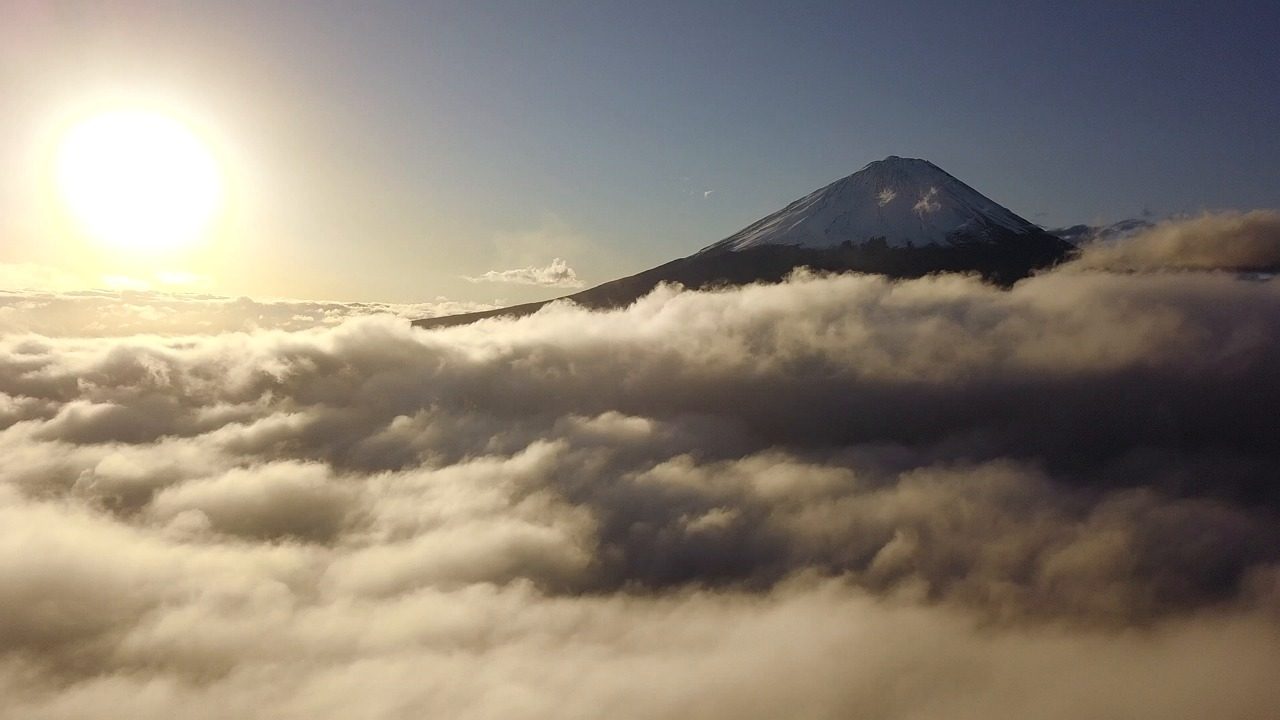
Located near the bus terminal, this area provides an unobstructed vantage point for capturing the sea of clouds often seen on a mt fuji and hakone tour.

Yoshida Trail Entrance

Best light · Mid-morning

Capture the contrast between the stone path leading upward and the towering summit; this is a hallmark of many mt fuji and hakone tour tours.

Fujisan 5th Station Plaza

Best light · Morning

This central gathering area offers a wide-angle perspective of the mountain base perfect for travelers booking mt fuji and hakone tour tickets.

Gallery

Moments from the experience

Food & drink

Where to eat nearby

Visitors stopping near a mt fuji and hakone tour find several functional dining options at the 5th Station, ranging from quick-service kiosks to casual mountain lodges. While these eateries provide convenient nourishment for those utilizing mt fuji and hakone tour tours, options are localized to the immediate plaza area.

Unjou Yasudaya

$10-20

Café and Souvenir Shop

This venue offers hot bowls of ramen and curry, ideal for warming up before checking your mt fuji and hakone tour tickets. It is popular for quick meals before beginning the ascent.;Komitake売店

Customer Reviews

What travelers say

Real experiences from real travelers

4.5
Based on undefined reviews
1 ★ 880
2 ★ 640
3 ★ 1490
4 ★ 4310
5 ★ 16820
M
Marcus Delaney
United States · 2026-07-22

Above the cloud line

We reached the Subaru Line 5th Station just after ten and the car park was already sitting on top of a solid deck of white cloud. Our mt fuji and hakone tour guide pointed out the Yoshida Trail head and the old Komitake Shrine before we walked the ridge path. The air was thin enough that I noticed it climbing twenty steps.

Y
Yuki Tanabe
Japan · 2026-06-14

Worth doing as a local

I had never bothered with an organised 富士箱根ツアー until my in-laws came over from Osaka. Standing at 2,300 metres with the tree line dropping away below you is a completely different sensation to seeing the mountain from a train window. Lake Ashi in the afternoon light made the loop feel finished rather than rushed.

P
Priya Raghavan
United Kingdom · 2026-05-03

Cloud came in fast

The summit stayed hidden for most of our time at the 5th Station, which the guide said happens often in late spring. The sulphur vents at Owakudani made up for it, and you smell that valley before the gondola doors even open. If clear weather matters to you, get mt fuji and hakone tour tickets from an operator with a flexible date policy.

A
Andreas Kohl
Germany · 2026-04-19

Red gravel underfoot

What surprised me was the colour of the ground up at the station, rust-red volcanic scoria everywhere, nothing like the white cone you see on postcards. The ropeway crossing over the steam field was the part my teenage son talked about for days. Our Tokyo Mt Fuji day tour driver knew which pull-offs still had space at midday.

C
Camila Moreira
Brazil · 2026-03-08

Snow beside the path

There was still packed snow along the edges of the walkway and the wind at the 5th Station cut straight through a light fleece. Bring one more layer than you think you need, even when it is mild in the city. The vermilion torii with the grey ridge behind it is the image that stayed with me.

T
Thomas Reiner
Austria · 2026-02-27

Small group made it

Sorting through the mt fuji and hakone tour tours listed online was genuinely confusing, but the small-group option we picked had only twelve of us and that mattered at the busier stops. The lake crossing was calm and half empty in late February. Mount Komagatake gave us a second angle on the cone that most people skip.

S
Sarah Whitfield
Australia · 2025-11-16

Autumn colour on the road

Driving up through the changing forest towards the fifth station was nearly as good as arriving there. Steam drifting out of the Owakudani valley into cold November air is something photographs undersell badly. Our guide mentioned that pilgrims traditionally started from Sengen Shrine at the base rather than halfway up.

J
Jean-Luc Ferrand
France · 2025-08-30

Busy but well handled

Late summer means coaches, and the parking area was completely full when we pulled in around midday. The mt fuji and hakone tour tour we joined managed the logistics carefully and nobody in our group went missing at the transfers. Cold soba eaten at altitude in warm weather was an odd combination that worked.

E
Elena Sokolova
Spain · 2025-05-21

Cloud parted for ten minutes

We had more or less given up on seeing the top when the cloud shifted and the whole upper cone stood there above us for maybe ten minutes. Half our group forgot they were holding cameras. Anyone working through a list of Tokyo landmarks should treat this as a full day out of the city rather than a detour.

D
David Okonkwo
Canada · 2026-01-12

Whiteout in January

Visibility at the 5th Station was maybe twenty metres and we saw nothing of the mountain at all. The Hakone half rescued the day with the ropeway and the steam valley, which are fine in any weather. Nobody controls cloud, but go in deep winter with realistic expectations.

FAQ

Frequently asked questions

Everything you need to know for your journey

Ready for Adventure?

Join thousands of happy travelers who have discovered this incredible experience

Book Your Experience Now